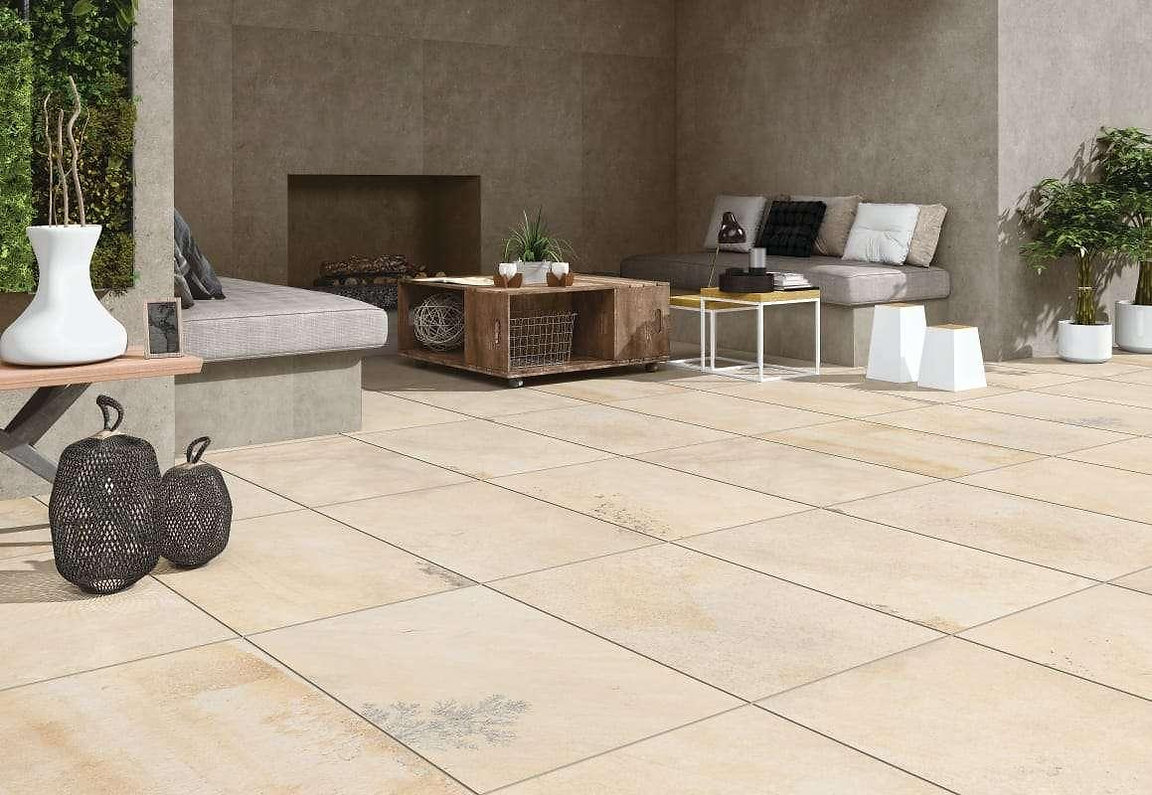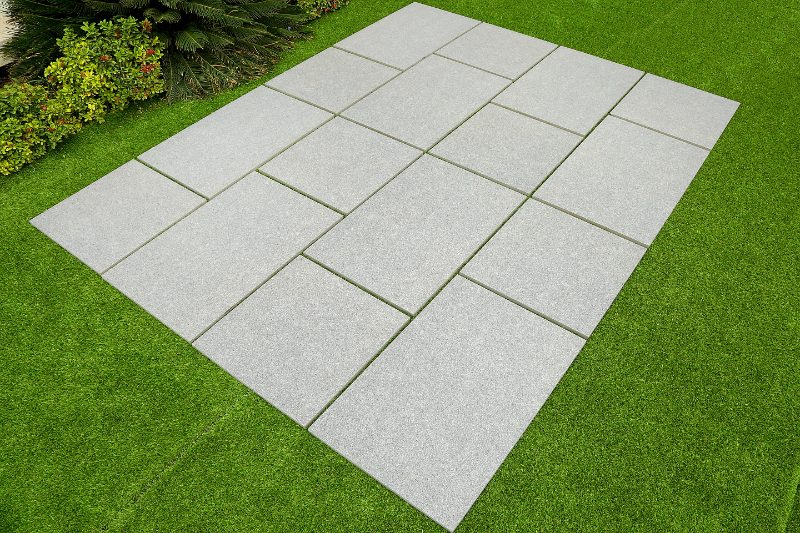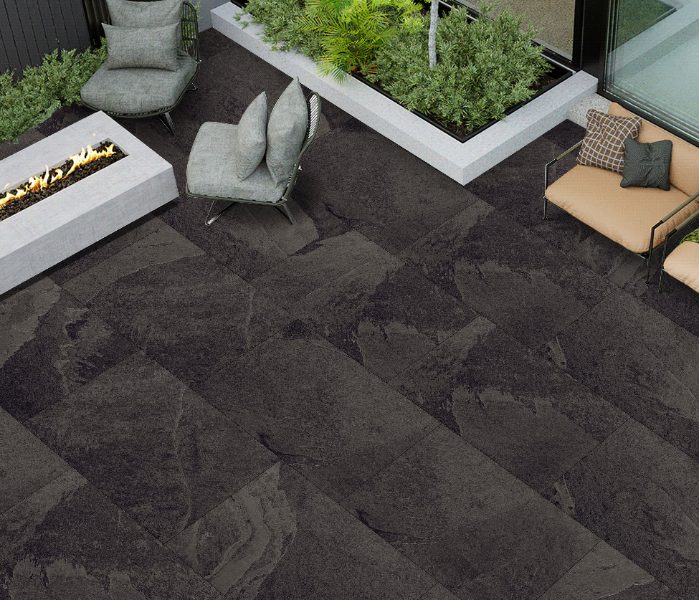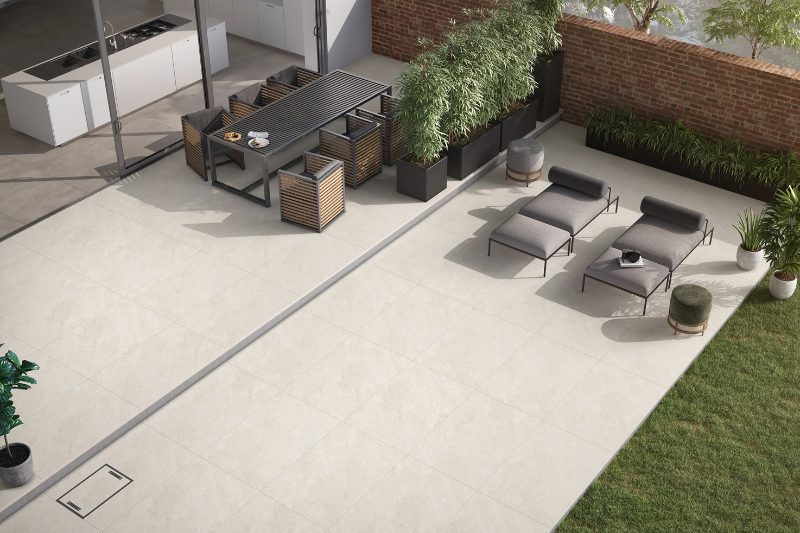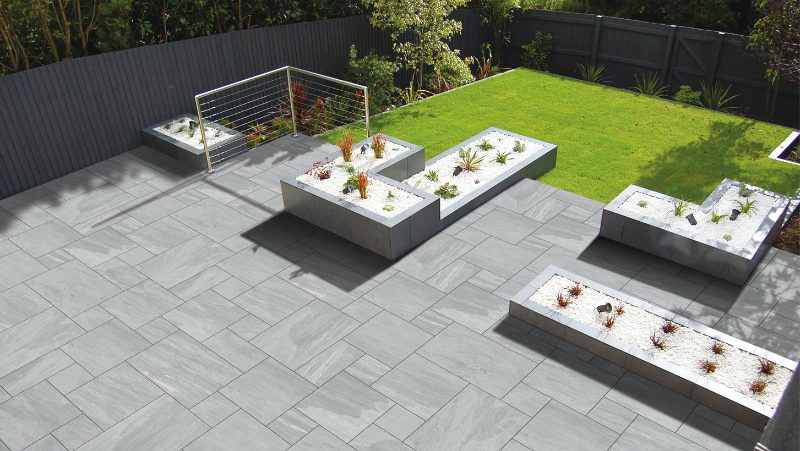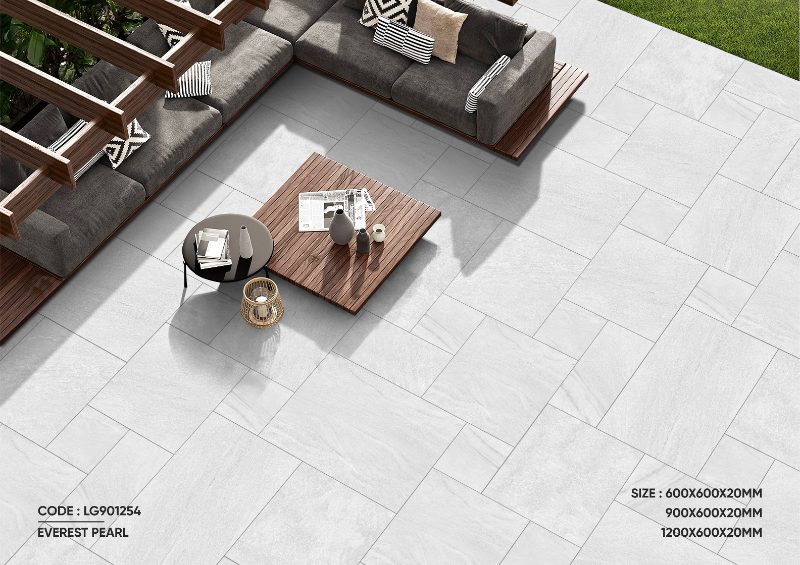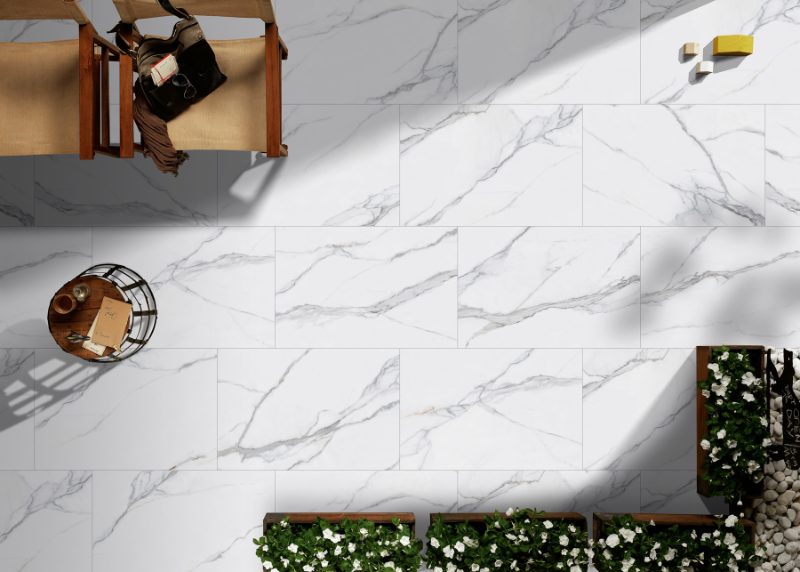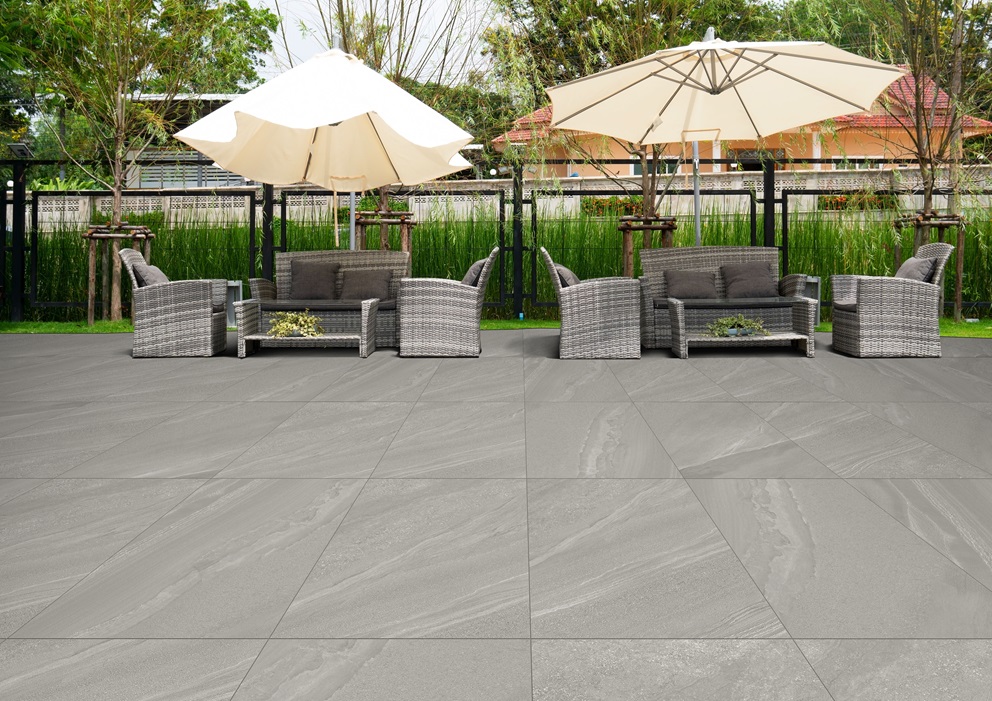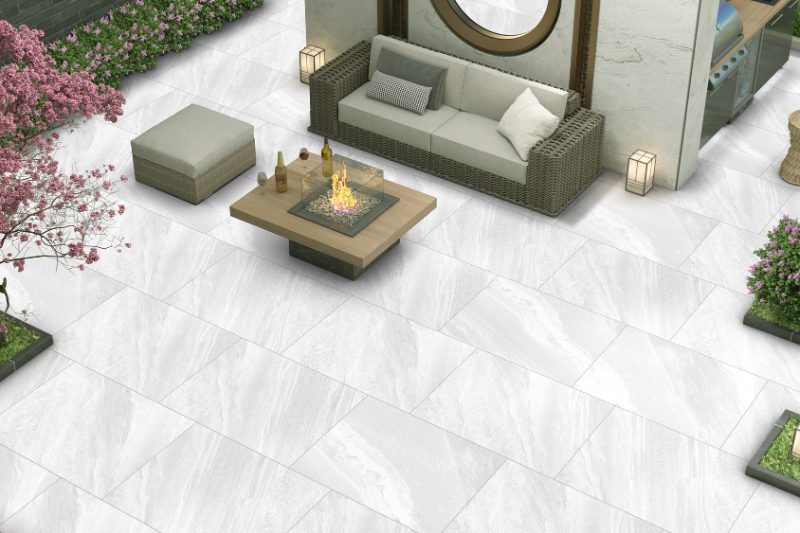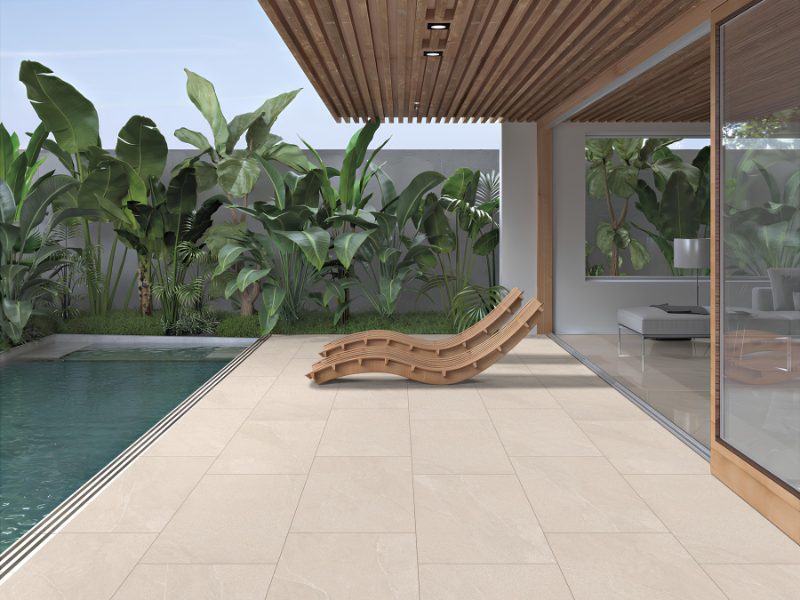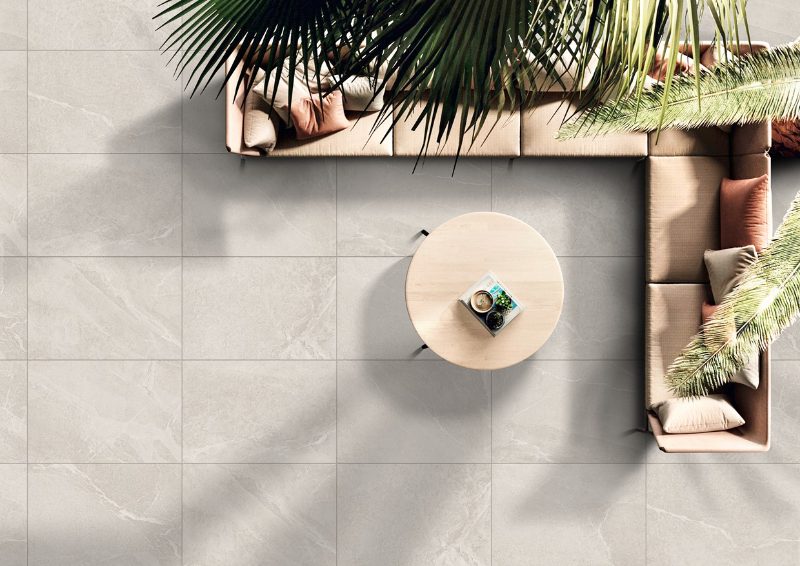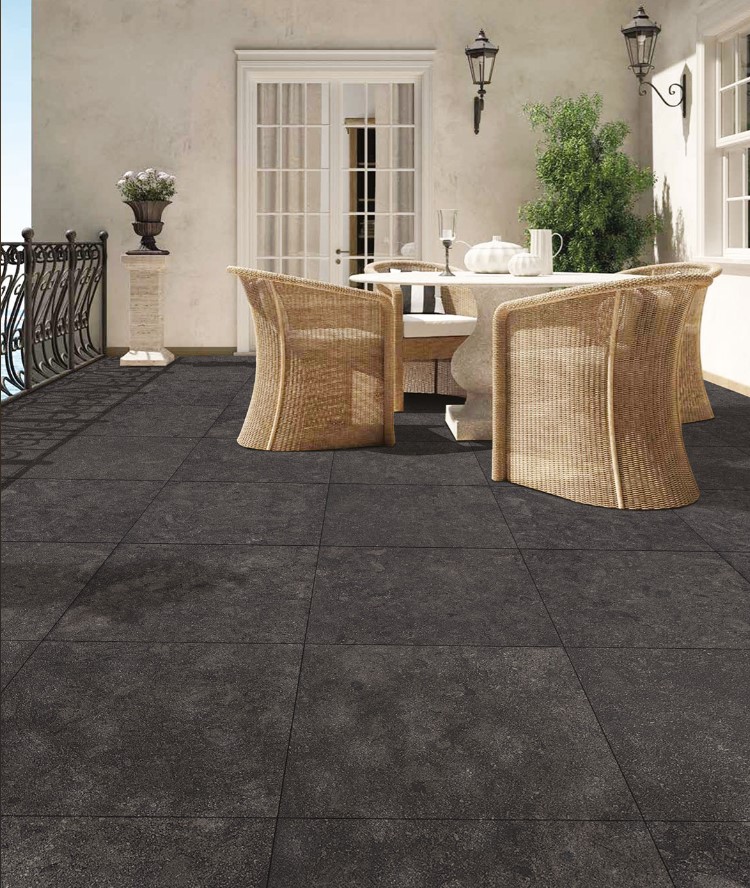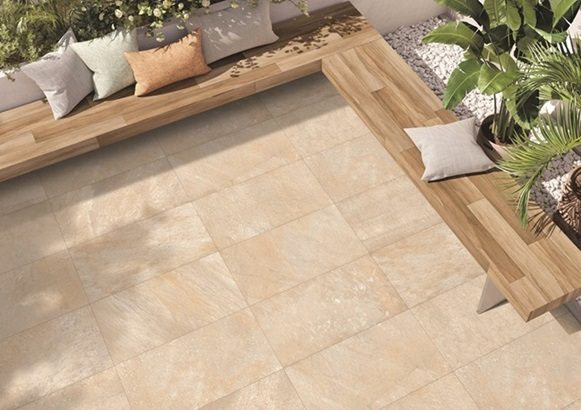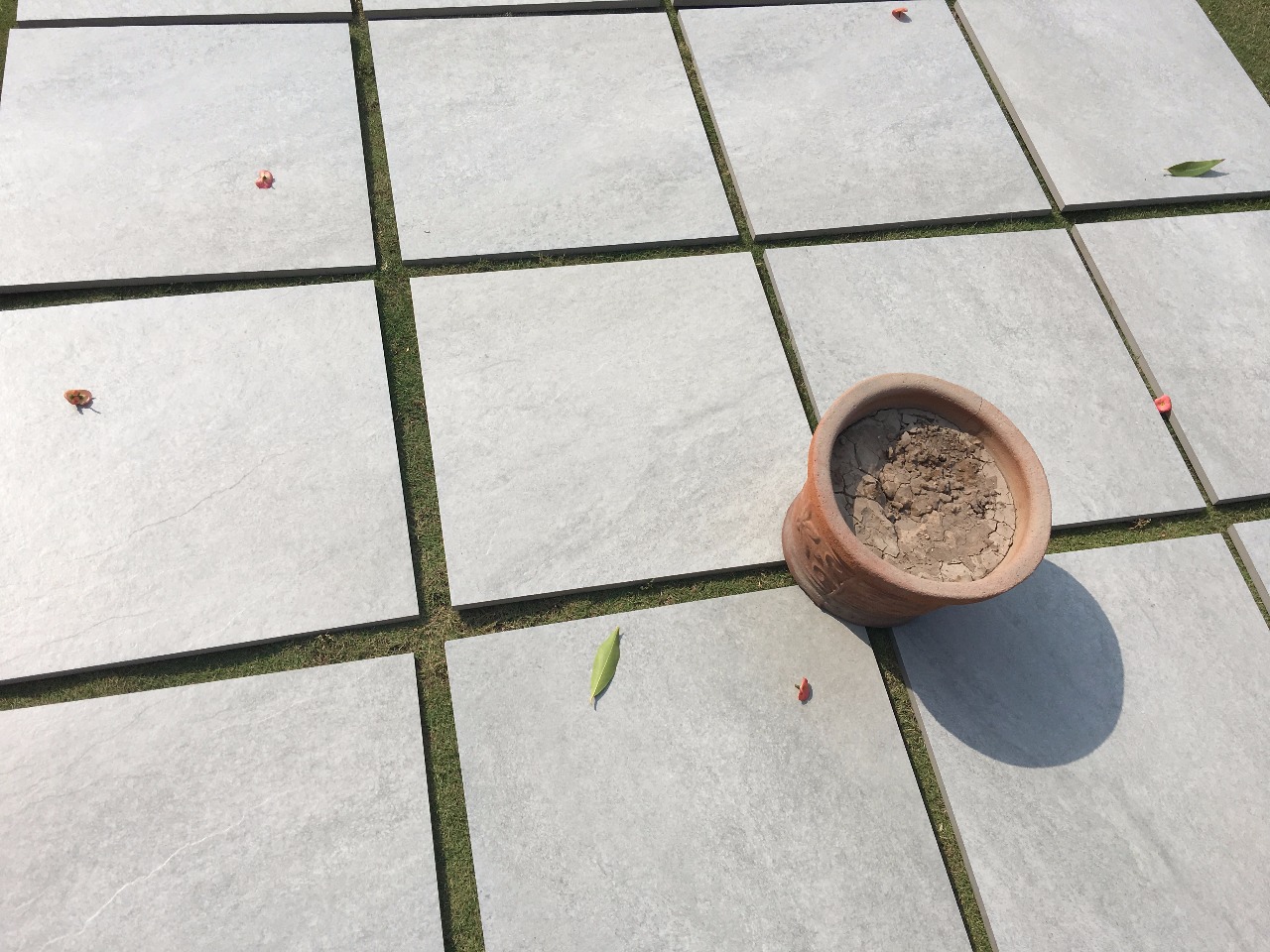
20mm vitrified porcelain in a wide range of colours and finishes. R11 anti-slip, frost proof, no sealing required. Free delivery anywhere in mainland Britain.


Porcelain paving is fired at high temperature until the clay vitrifies — the particles fuse into a dense, glass-hard body with almost no open pore structure. Water absorption sits below 0.5%, which is what makes it frost proof, stain resistant and effectively maintenance free. Natural stone, by contrast, is porous: it drinks in water, holds it through a freeze, and gradually picks up algae, moss and the marks of whatever gets spilled on it.
In practical terms that means a porcelain patio looks much the same in year ten as it did in year one. There is no sealing to do before you lay it and none afterwards. Cleaning is soapy water and a stiff brush. Colour does not fade, because the pattern is fired into the body of the slab rather than printed on the surface.
Every slab we stock is 20mm thick, rated R11 for slip resistance on the matt finish, and CE certified. R11 is the rating you want outdoors in Britain — it holds grip when wet, which matters for a patio that spends half the year damp.
The most common question we get. Both are good products; they suit different people.
| Porcelain | Indian Sandstone | |
|---|---|---|
| Sealing | Never needed | Recommended, and repeated every few years |
| Water absorption | Under 0.5% | Considerably higher — it is a natural stone |
| Appearance | Consistent slab to slab | Every slab different — that is the appeal |
| Upkeep | Wash occasionally | Wash, treat for algae, re-seal |
| Cutting | Needs a diamond blade and patience | Cuts more easily |
| Laying | Full mortar bed and slurry primer, no exceptions | Full mortar bed, primer advisable |
Put simply: choose porcelain if you want a patio that looks the same in ten years with almost no work. Choose Indian sandstone if you want natural variation and the softer, weathered character that only real stone gives. Plenty of customers order samples of both before deciding, which we send free.
Thirty-three finishes in stock, all 20mm. Colour is the decision most people find hardest, so here is how the range breaks down.
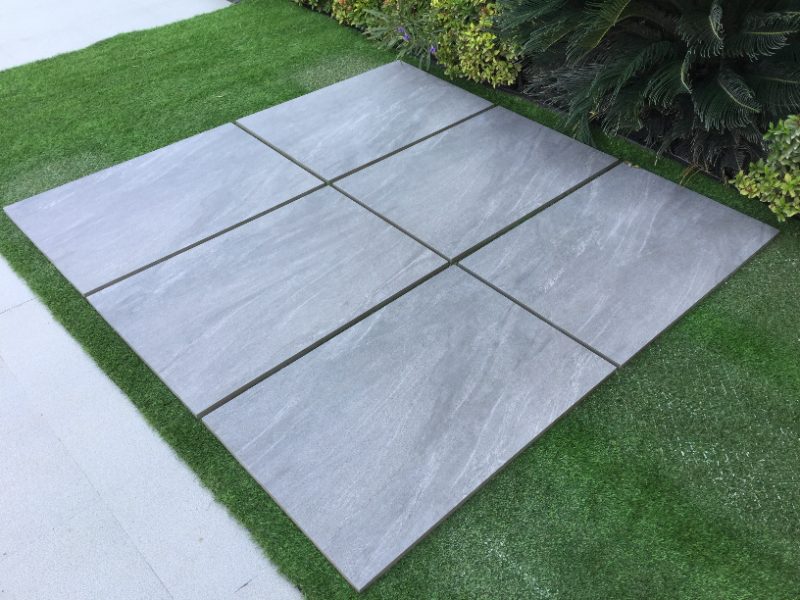
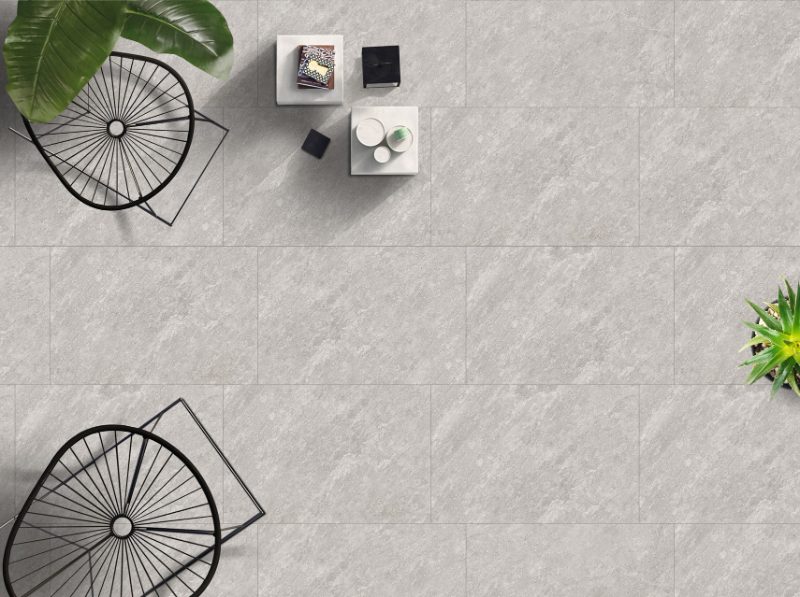
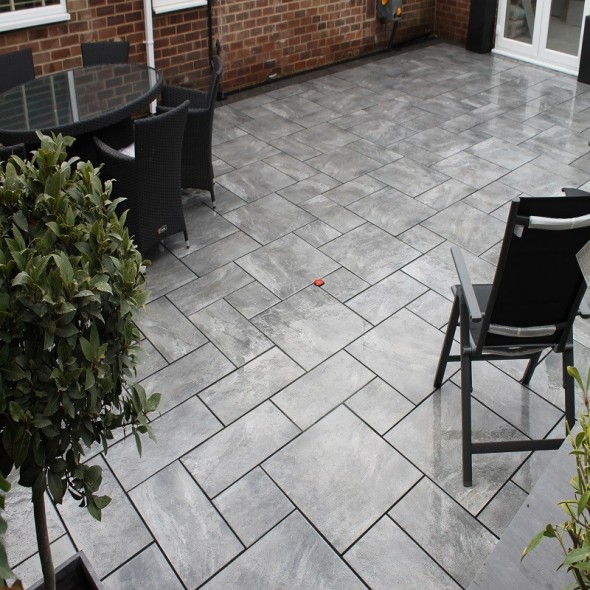
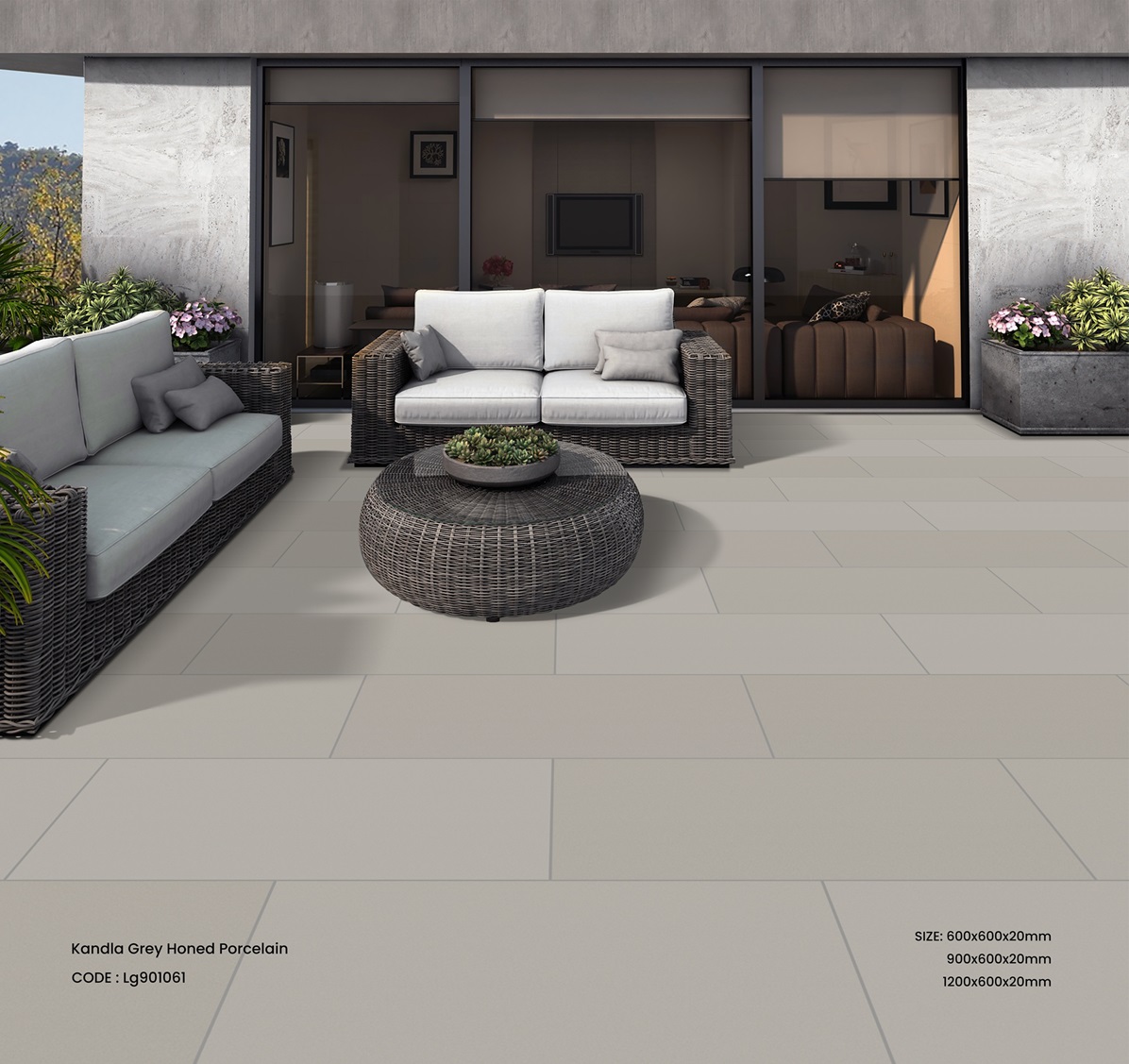
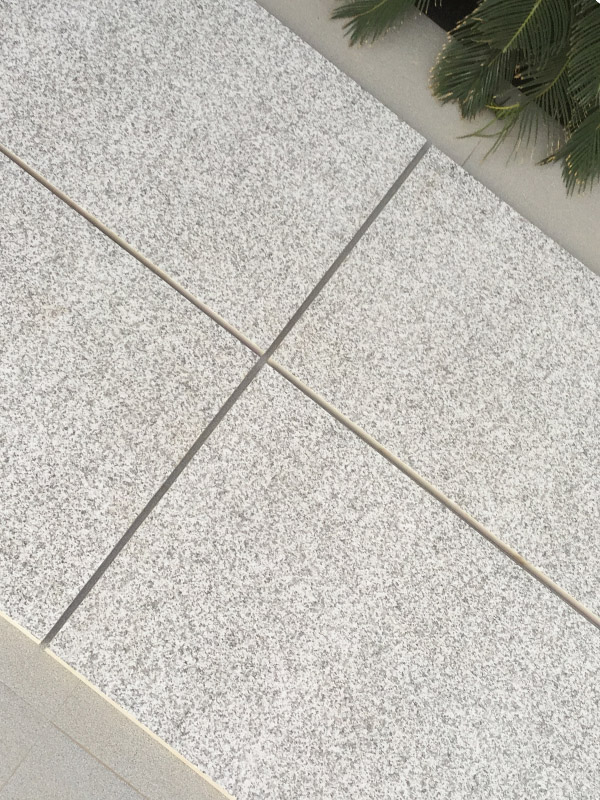
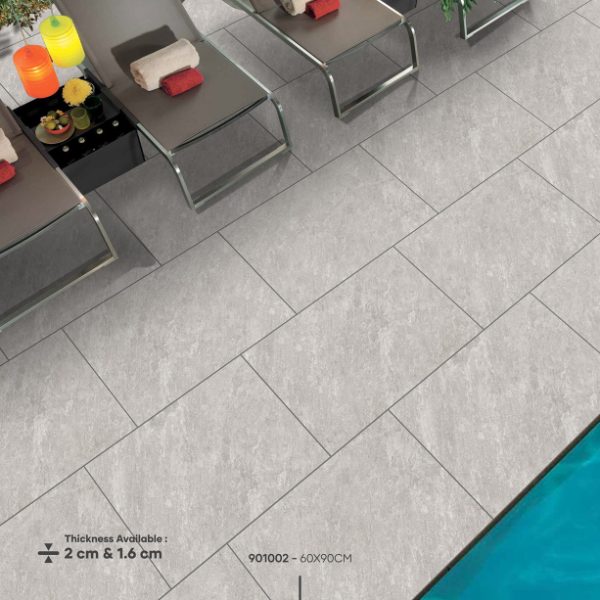
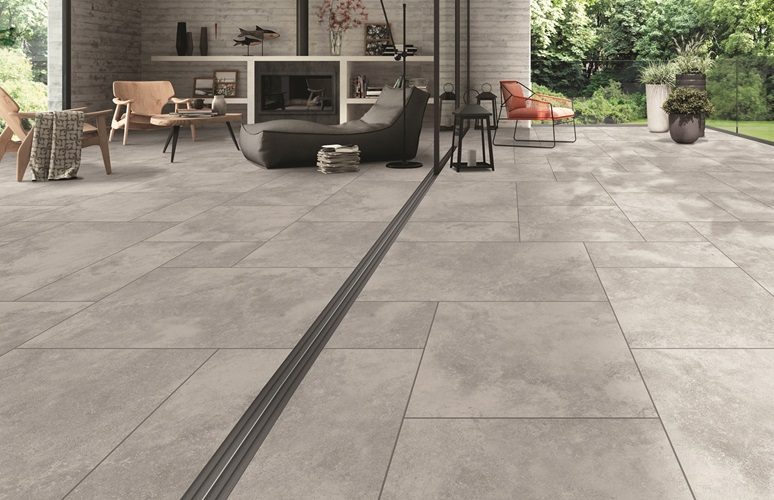
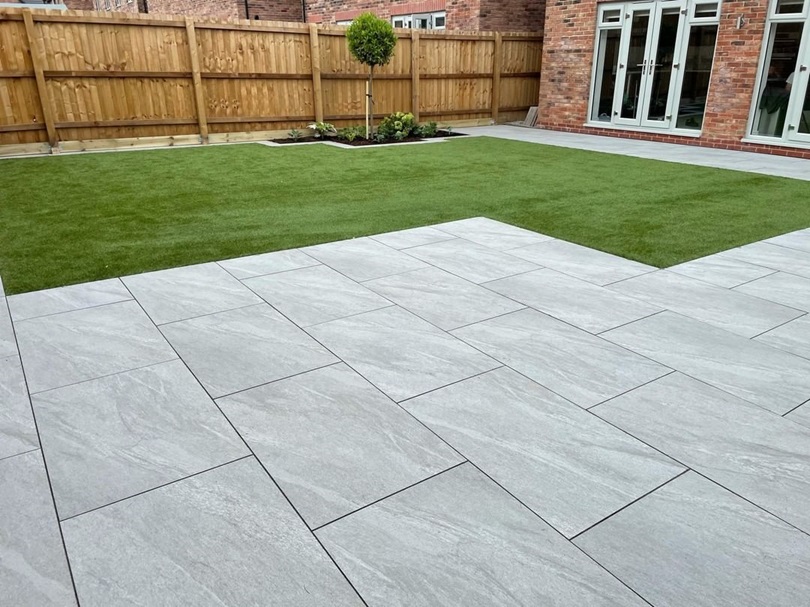
Far and away the most popular choice, and the safest bet against a modern render or grey aluminium bifolds. The range runs from the pale, almost silvery tones of Silver Grey and County Light Grey, through the mid tones of HS Grey, Quartz Grey and Universal Grey, to the deeper Anthracite Grey and Mid Grey Granite. Lighter greys make a small garden feel more open; darker greys hide dirt better and look sharper against planting.
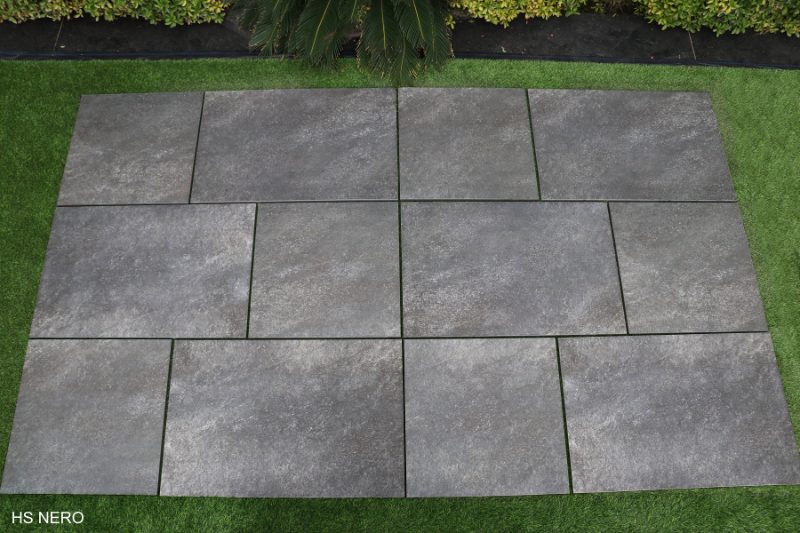
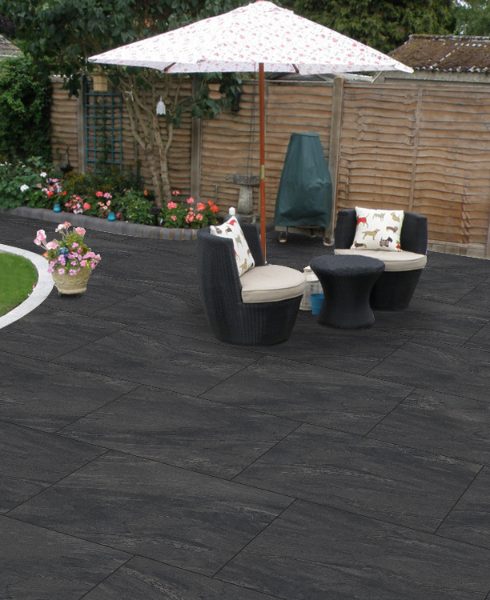
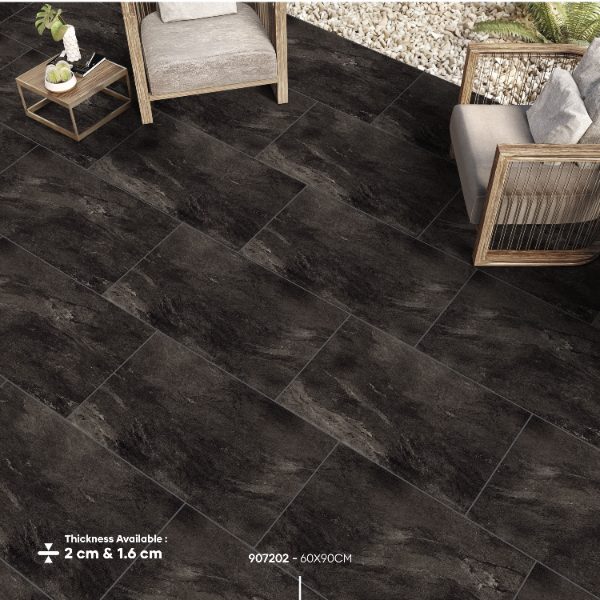
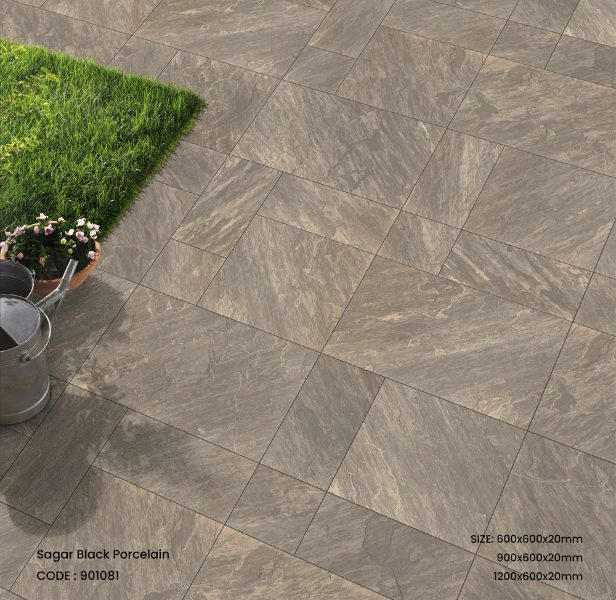
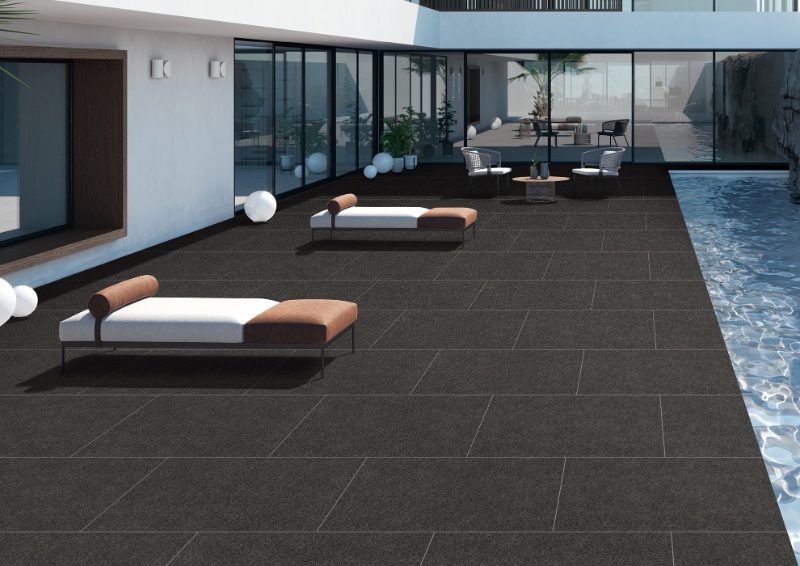
Dramatic, contemporary, and unbeatable for making green planting stand out. Anthracite Black, HS Nero, Basalt Black, Earthcore Black, Sagar Black and Fossil Nero cover everything from flat charcoal to textured stone effect. Black Slate reproduces riven slate without slate's tendency to flake. Worth knowing: dark slabs show dust and pollen more readily than mid greys.
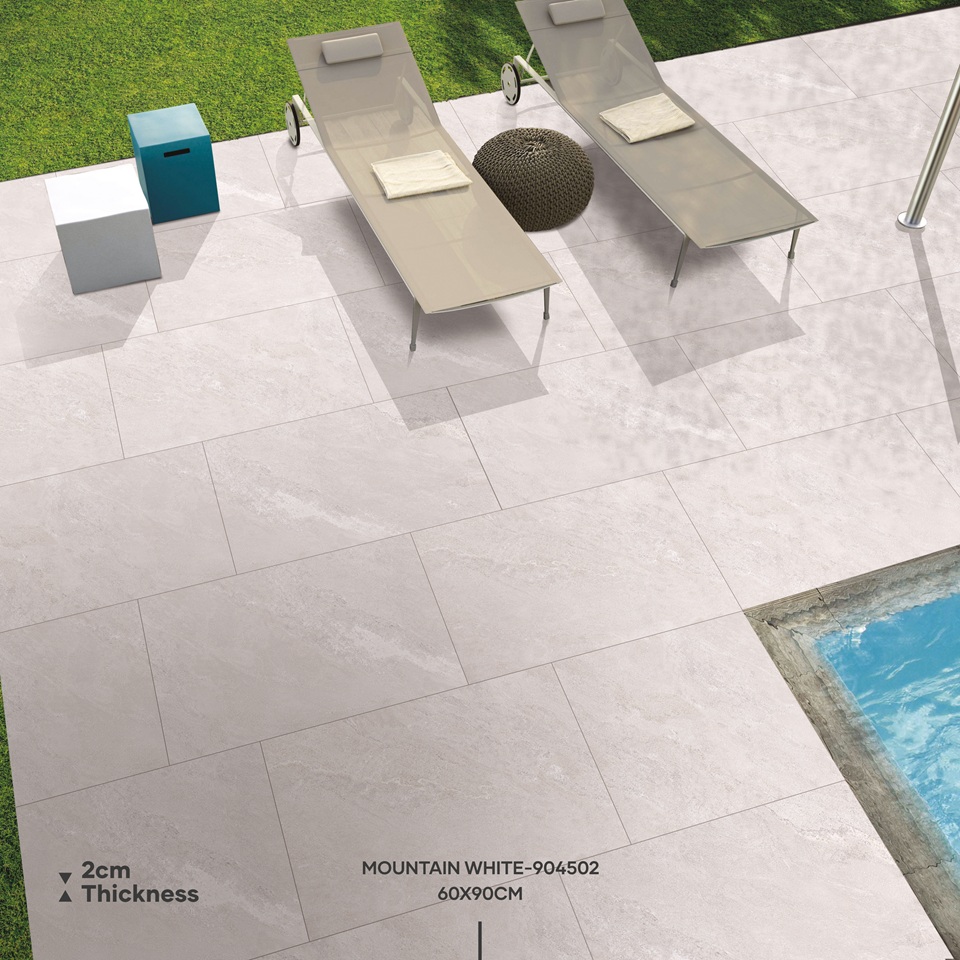
For bright, Mediterranean-feeling spaces and courtyards that need lifting. Quartz White, Himalayan White, Bodo White and Crossover White are the clean options; Limestone Creama (Ivory) and Everest Pearl are warmer. Maximus Statuario and Quartzite Bianco carry marble-style veining for a more formal look.
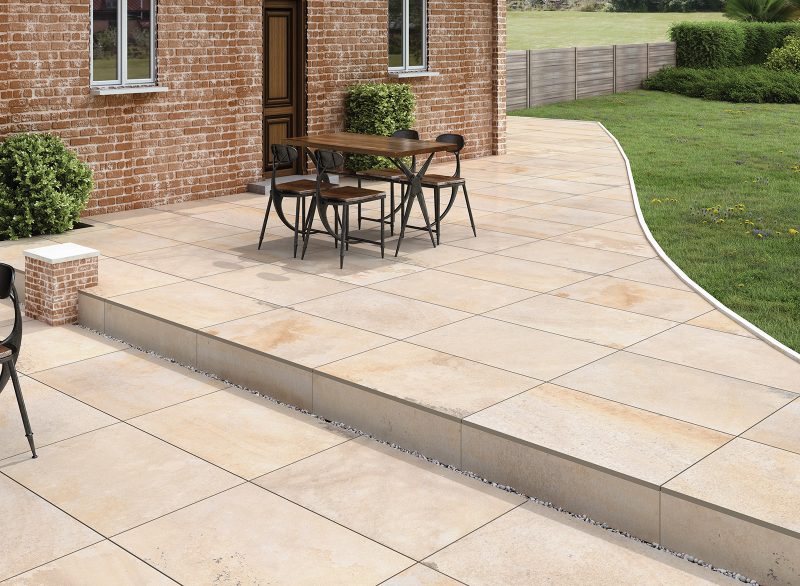
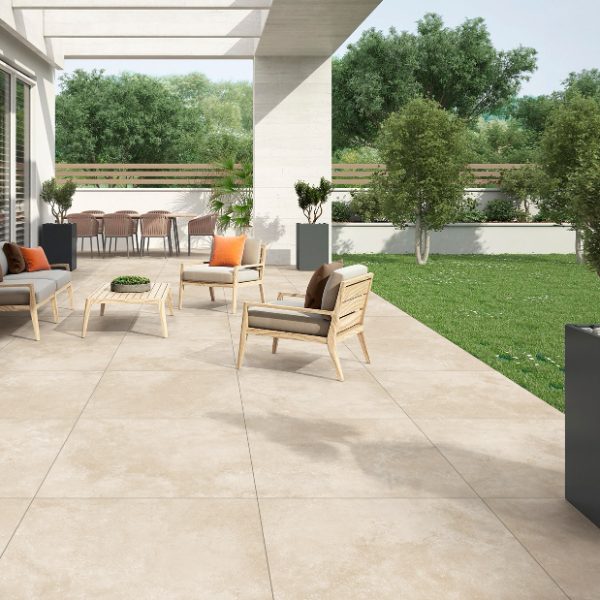
HS Beige, Getafe Beige and Limestone Ash bring warmth without going orange. These sit particularly well with red brick, which makes them a sensible choice for most British houses — grey against red brick can look cold.
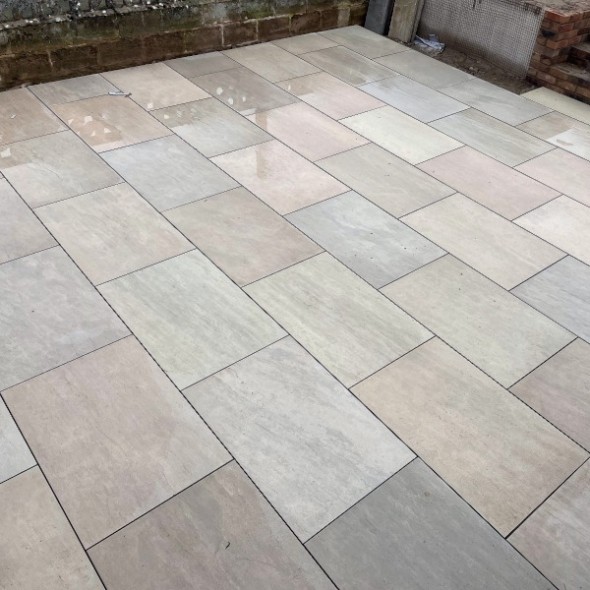
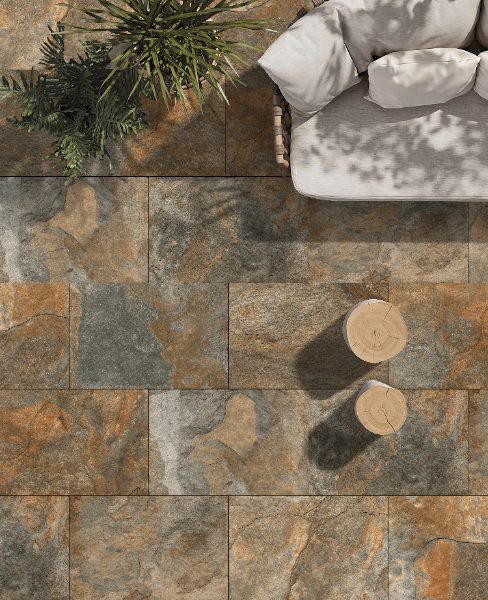
For anyone who wants the look of natural stone without the upkeep. Kandla Grey, Kandla Grey Sawn Honed, Raj Green and Fossil Mint reproduce the best-known Indian sandstones in porcelain, and Copper Rustic Slate gives a warm, riven finish. If you like how sandstone looks but not the sealing, start here.
Most of the range is supplied in 600 x 900mm — the size that suits the majority of British gardens, large enough to feel generous without becoming unmanageable to lift. 600 x 600mm squares suit smaller courtyards and formal layouts, and mix patio packs combine several sizes for a random, less regimented finish.
| Size | Typical pack | Best for |
|---|---|---|
| 600 x 900mm | 40 pieces, around 21.6m² | Most patios and garden terraces |
| 600 x 600mm | 60 pieces, around 21.6m² | Courtyards, formal grids, tight spaces |
| Mix patio pack | 72 pieces, mixed sizes | Random-laid, informal patios |
| 16mm x 600 x 900 | 52 pieces | Lighter-duty pedestrian areas |
Prices across the range run from roughly £19 to £25 per m², with free UK mainland delivery included. Exact prices and coverage per pack are shown on each product below. Order 10% more than you measure — cuts, breakages and the odd mistake are normal, and a second delivery for four slabs is an expensive afternoon.
Porcelain is not laid like concrete slabs, and this is where most DIY patios go wrong. Because the slab is non-porous, mortar cannot soak into it and grip. Laid on five dabs, or straight onto mortar with no primer, the slabs will lift within a season or two.
Sub-base: 100–150mm of compacted MOT Type 1 for a patio, more for a driveway. Falls: around 1:80 away from the house so water runs off. Bedding: a full wet mortar bed, not spot dabs — you want 100% contact under the slab.
The bit people miss: paint a slurry primer onto the back of every slab immediately before setting it. It is the chemical bond between a non-porous slab and the mortar, and skipping it is the single most common cause of failure.
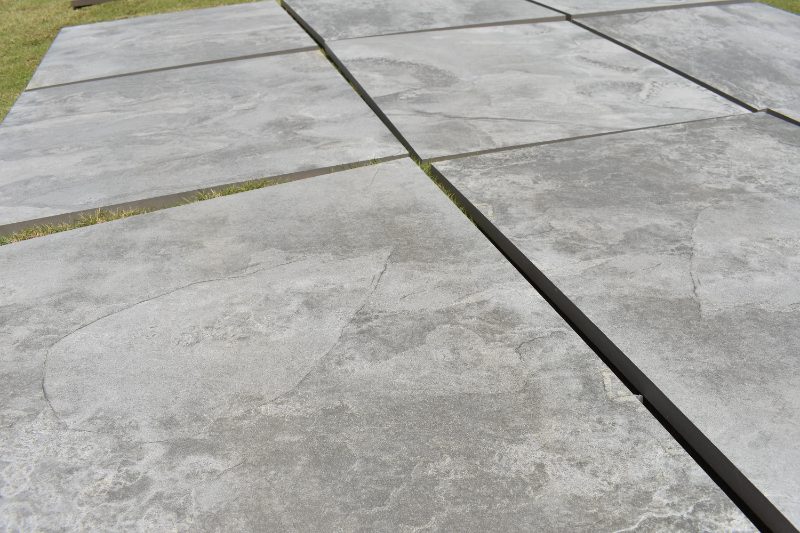
Leave 5mm joints, point with a proper brush-in jointing compound, and cut with a diamond blade — slowly, with water. Porcelain will chip if you rush it.
Colour on a screen is not colour in your garden. Light, aspect and the colour of your house all change how a slab reads, and grey in particular varies enormously between a phone screen and an overcast Tuesday in Preston. Order free samples and look at them outdoors, wet and dry, at different times of day.
Delivery is free to UK mainland addresses with the price shown. Pallets come on an 18-tonne vehicle and are delivered kerbside, so you will need someone there and somewhere to put them. We are an independent, family-run merchant based in Preston, and we are on the end of the phone on 01772 287622 if you want to talk a job through before ordering.