🚚 FREE Delivery on ALL Orders  |  🧱 Free Brick Samples  |  🏗️ Trade Accounts Available
HomePaving › Indian Sandstone

Indian Sandstone Paving 🌿

Hand-cut natural sandstone in Kandla Grey, Raj Green, Fossil Mint and more, in patio packs and single sizes. Free delivery anywhere in mainland Britain.

🚚
Free DeliveryAll orders, UK mainland
📦
Next-Day DispatchOrder before 2pm
🏅
Trade QualityPremium materials
📞
Expert Advice01772 287622
Kanlda Grey Sandstone
Indian Sandstone
Kanlda Grey Sandstone
£470.57
Autumn Brown Sandstone
Indian Sandstone
Autumn Brown Sandstone
£470.57
Fossil Mint Sandstone
Indian Sandstone
Fossil Mint Sandstone
£526.44
Yellow Mint Sandstone
Indian Sandstone
Yellow Mint Sandstone
£458.63
Rippon Buff Sandstone
Indian Sandstone
Rippon Buff Sandstone
£494.80
York Buff Sandstone
Indian Sandstone
York Buff Sandstone
£458.63
Camel Dust Sandstone
Indian Sandstone
Camel Dust Sandstone
£458.63
Raj Green Sandstone
Indian Sandstone
Raj Green Sandstone
£513.71
Antique Black Sandstone
Indian Sandstone
Antique Black Sandstone
£568.24

Why Indian Sandstone?

Indian sandstone has been the default British patio stone for a good twenty years, and for sound reasons. It is a genuine natural stone with real depth of colour, it weathers into a garden rather than sitting on top of it, and it costs a fraction of what equivalent British quarried stone would.

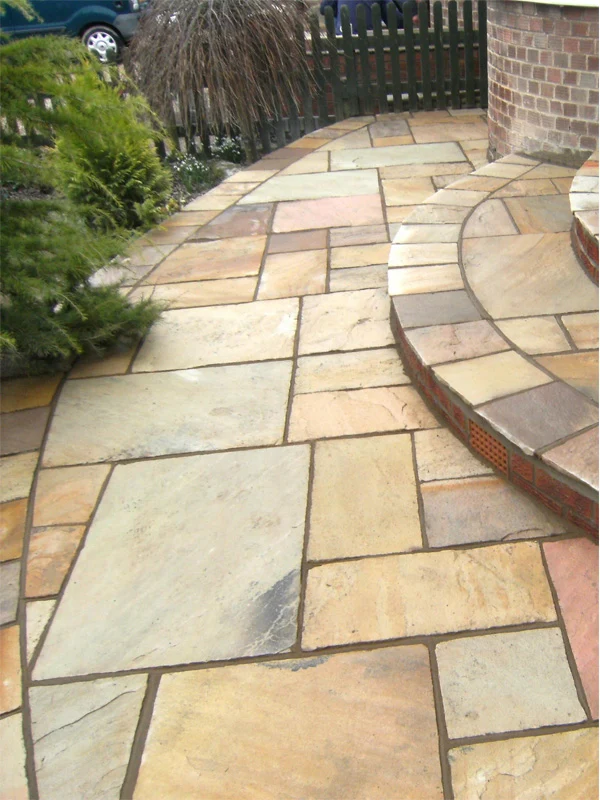
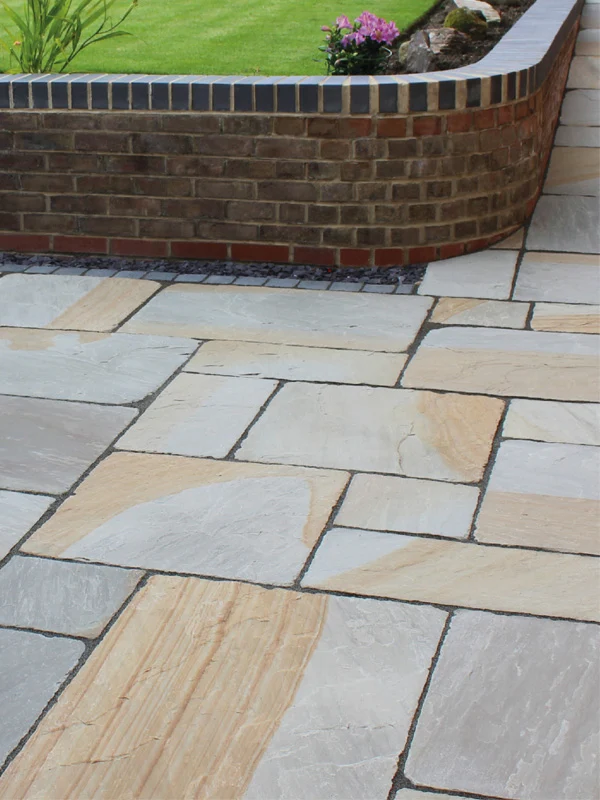
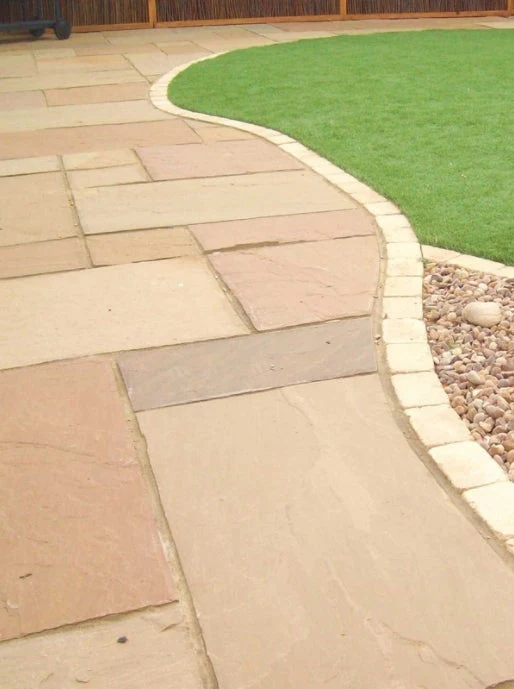
The appeal is variation. No two slabs are identical — you get banding, tonal shifts, the occasional fossil trace and edges that catch low sun. A sandstone patio looks handmade because it partly is: most of our range is riven, split along the stone's natural bedding plane rather than sawn flat.

Our range is 22mm calibrated, meaning the slabs are ground to a consistent thickness on the underside so they bed evenly. Uncalibrated stone varies enough to make laying genuinely difficult.

Our Indian Sandstone Colours

Nine colours in stock. Names vary between suppliers, so here is what each actually looks like.

Kandla Grey

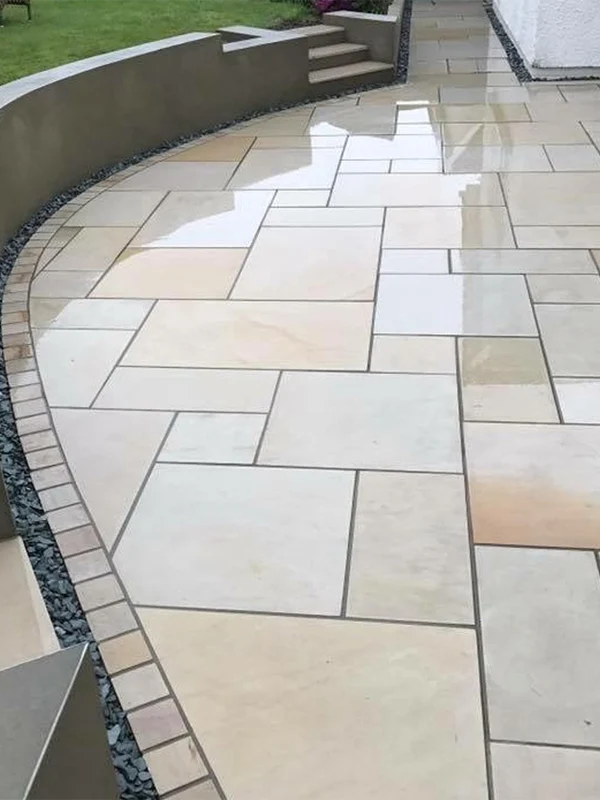
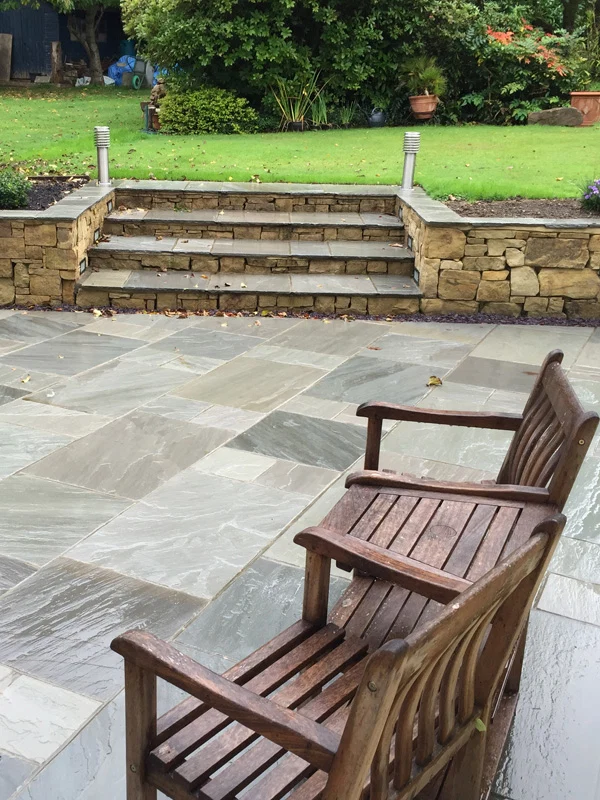
The most-specified Indian sandstone in Britain, and the one most people mean when they say "grey sandstone patio". A soft silver-grey with paler bands of dove and pearl, and the occasional whisper of blue or warm buff. Cool enough to work against modern render and grey bifolds, soft enough not to fight a traditional planting scheme. If you want one safe choice, this is it.

Raj Green

Green, grey and rust-brown running through the same slab, sometimes through the same square foot. The most varied stone we sell and the most forgiving in a mature garden, because there is a tone in it to pick up almost any brick, fence or planting. Available calibrated and tumbled for a softer, aged edge.

Fossil Mint & Yellow Mint

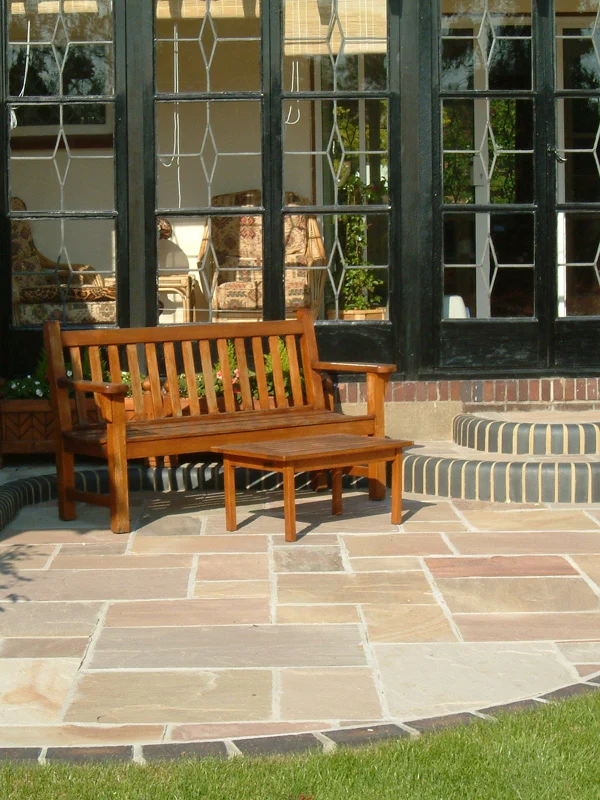
Warm buff-yellow with pink and grey drifting through. Fossil Mint carries the faint fossil markings that give it its name. Yellow Mint is cleaner and more consistently golden, supplied sawn honed for a smoother, more contemporary surface. Both are the natural choice against red or buff brick, where grey can read cold.

Autumn Brown

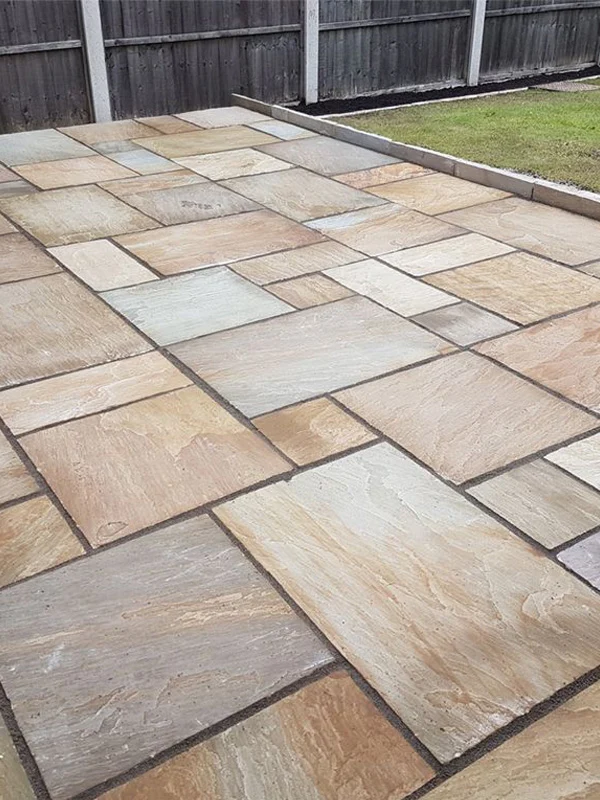
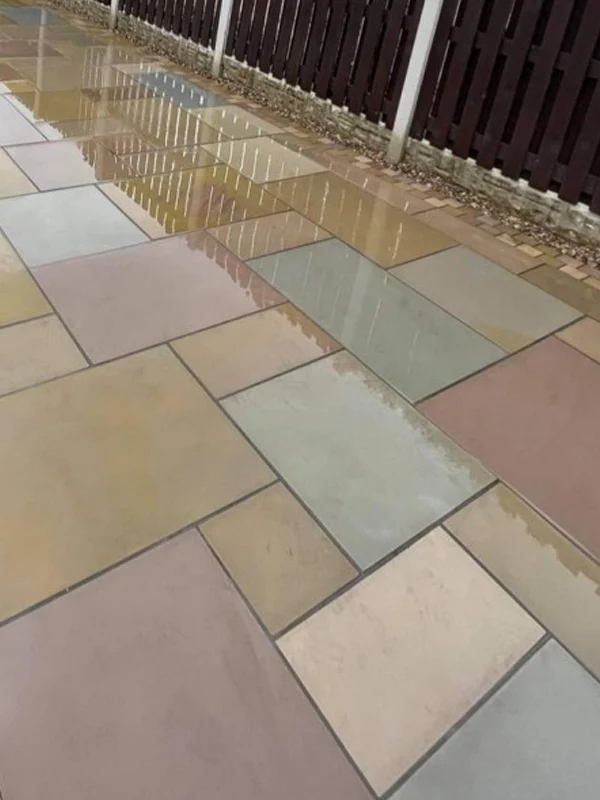
Rich browns and warm reds with darker banding. The warmest stone in the range and the one that suits period properties and rural settings best. Looks particularly good wet, which in this country is most of the time.

Rippon Buff, York Buff & Camel Dust

The subtler end of the range. Rippon Buff is sawn honed, pale and even, and works well in formal layouts. York Buff is hand-cut with more character in the edges, and is the closest thing here to traditional Yorkstone at a fraction of the price. Camel Dust is a soft, sandy neutral — also hand-cut, and quietly one of the best sellers.

Antique Black

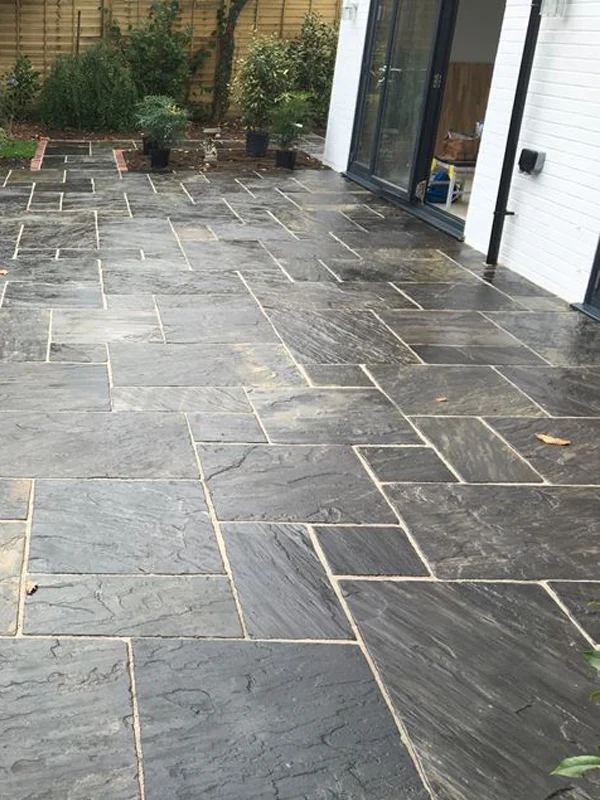
Deep charcoal-black, hand-cut, and the most striking stone we stock. Green planting against black sandstone is hard to beat. Also available calibrated and tumbled. The most expensive in the range and worth it if the look is what you are after.
Hand-Cut, Sawn or Tumbled?

The finish matters as much as the colour, and it is the part most people have never had explained.

Finish Edges Suits
Hand-cutSlightly irregular, split by handCottages, period homes, informal gardens
Sawn honedStraight, machine-cut, tight jointsContemporary schemes, formal layouts
Calibrated & tumbledSoftened and rounded deliberatelyAn aged look from day one

Hand-cut gives more character but needs slightly wider joints, because the edges are not perfectly straight. Sawn honed lays tighter and looks crisper, but loses some of the rustic quality people buy sandstone for. Tumbled is the compromise — sawn accuracy with worn edges.

Patio Packs, Sizes & Coverage

Most of the range comes as a mix patio pack — 60 pieces in several sizes, designed to be laid in a random pattern. It is how sandstone has traditionally been laid, it avoids the grid-like look of a single size, and it means you are not left short of one particular slab.

Several colours are also available in single-size packs — usually 600 x 900mm or 600 x 600mm — if you want a regular, contemporary layout. Coverage per pack sits between roughly 18 and 20m² depending on the mix, and the exact figure is shown on every product page below.

Prices run from about £22.95 to £32.95 per m² with free UK mainland delivery included. As with any paving, order around 10% more than you measure to cover cuts and the occasional breakage.

Sealing, Black Spots & Looking After Sandstone

Sandstone is porous. That is what gives it depth and warmth, and it is also what means it needs a little more attention than porcelain.

Sealing. Not compulsory, but we would recommend it. A breathable impregnating sealer slows down staining from barbecues, wine and leaf tannin, and makes algae easier to shift. Seal after laying once the stone is thoroughly dry, and expect to redo it every three to five years depending on exposure.

Black spots. The question we get asked most, and the one many suppliers avoid. Small dark spots can appear on sandstone, most commonly on Kandla Grey. They are a lichen growing on naturally occurring mineral deposits in the stone — not a fault, not dirt, and not something a jet wash will remove. A dedicated black spot remover deals with them; sealing beforehand makes them much less likely to take hold in the first place.

General cleaning. Warm soapy water and a stiff brush a couple of times a year. Keep pressure washers on a wide fan and well back — held close, they will erode the surface of the stone and leave permanent tracking.

Free Samples & UK Delivery

Natural stone varies by definition, so a sample tells you far more than a photograph. Order free samples and look at them outdoors, wet and dry — sandstone changes considerably in the rain, and since this is Britain, that is worth knowing before you commit.

Delivery is free to UK mainland addresses, included in the price. Pallets arrive kerbside on an 18-tonne vehicle. If you would rather talk through colours or quantities first, we are an independent, family-run merchant in Preston and you can reach us on 01772 287622. If you are weighing sandstone against porcelain paving, we are happy to give you an honest comparison rather than a sales pitch.

Frequently Asked Questions
What is the best Indian sandstone colour?
Kandla Grey is the most specified in Britain — a soft silver-grey that suits both modern and traditional houses. Raj Green is the most forgiving in a mature garden because of its variation, and Fossil Mint or Autumn Brown work better against red brick, where grey can read cold.
Does Indian sandstone need sealing?
It is not compulsory, but we recommend it. Sandstone is porous, and a breathable impregnating sealer slows staining and makes algae easier to remove. Seal after laying once the stone is fully dry, then every three to five years.
What are the black spots on Indian sandstone?
A lichen growing on naturally occurring mineral deposits in the stone. It is not a fault or ordinary dirt, and a jet wash will not remove it. A dedicated black spot remover deals with it, and sealing beforehand makes it far less likely to appear. Kandla Grey is the most commonly affected.
What does calibrated mean?
Calibrated stone has been ground to a consistent thickness on the underside so every slab beds to the same depth. Our range is 22mm calibrated. Uncalibrated stone varies enough in thickness to make laying considerably harder.
Hand-cut or sawn sandstone — which should I choose?
Hand-cut has slightly irregular edges and more character, suiting period properties and informal gardens, but needs marginally wider joints. Sawn honed is machine-cut with straight edges for tighter joints and a more contemporary look. Calibrated and tumbled sits between the two.
What is a patio pack?
A mix of several slab sizes — usually 60 pieces — designed to be laid in a random pattern rather than a grid. It is the traditional way sandstone is laid and avoids the regimented look of a single size. Coverage is generally between 18 and 20m² per pack.
How much does Indian sandstone cost per m²?
Our range runs from about £22.95 to £32.95 per square metre, with free UK mainland delivery included in the price. Exact prices and coverage are shown on each product page.
How much sandstone do I need?
Measure your area in square metres and add roughly 10% for cuts and breakages. Each product page shows the coverage per pack so you can work out the number of packs.
Can I pressure wash Indian sandstone?
Yes, but carefully. Use a wide fan and keep the lance well back. Held close, a pressure washer will erode the surface of the stone and leave permanent tracking marks. Warm soapy water and a stiff brush is safer for routine cleaning.
Indian sandstone or porcelain paving?
Sandstone gives natural variation and a softer, weathered character, but is porous and benefits from sealing. Porcelain never needs sealing and looks identical in ten years, but has less variation slab to slab. Order free samples of both and compare them in your own light.
Do you deliver Indian sandstone across the UK?
Yes. Delivery is free to UK mainland addresses and included in the price shown. Pallets are delivered kerbside on an 18-tonne vehicle, so please make sure there is access and someone available.
Can I get free samples of Indian sandstone?
Yes. Because natural stone varies by definition, a sample tells you far more than a photograph. Samples are free — look at them outdoors, wet and dry, as sandstone changes noticeably in the rain.